• Home
  • About
  • Wineries
  • Resources
  • Wine Century Club
Give Me Grapes

The Long End to Burgundy

Clearly I’m having some trouble keeping up. We’re only one day shy of a full month since my last post and it’s been weeks since I drank these last two Burgundies. I hardly know what to say about them!

2007 Louis Latour Meursault 1er Cru "Goutte d'Or"First up, Meursault, where white wine dominates. There are no Grand Cru wines here, but many Premier Cru and the quality is apparently pretty even across the region.

The wine I drank, from Louis Latour, was lemon-yellow and had aromas of fresh straw, lemon and a little cream. It had a medium body and was creamy up front, but had a bitter acid on the back palate with a long finish.

And finally, for my last Burgundy, I thought it appropriate that I try a Grand Cru. While I’m sure that it’s not the same as a DRC, it’s a Grand Cru Burgundy for only $55! This one is from Corton, and one of the top areas within it, Les Renardes.

2008 Domaine Delarche Corton-Renardes Grand CruThis particular Corton-Renardes, from Domaine Marius Delarche, was ripe and fresh on the nose, with eucalyptus and a hint of raspberry. It was very smooth, as I expected a Grand Cru to be, with medium body. It was tangy and acidic, as undoubtedly it would improve with more bottle age, but the tannins were quite subtle. There wasn’t a lot of fruit, and it was a little green, but this was a 3-year-old Grand Cru Burgundy that we clearly drank too young. The sacrifices I make for the sake of Give Me Grapes!

Unfortunately, I drank these wines long enough ago that I don’t think I can fairly give them scores. However, these were, at least according to the labels, the best wines of the Burgundy bunch and why I saved them for last. They definitely were the best upon drinking them as well.

So, what comes next? First, I must think of ideas to make sure I don’t let one month lapses become the norm. But, I’m thinking it’s time to move to another classic wine region, outside France.
Posted by Erin at 6/04/2011 08:48:00 PM in Burgundy, chardonnay, France, Grand Cru, pinot noir

Volnay (Côte de Beaune)

I’ve sat here for several minutes unsure of how to start or what to write about Volnay. There are no fun anecdotes, tidbits, or trivia. So here it is: Volnay, they make wine there.

Ok, here are a few tidbits, although I must warn you they are pretty unremarkable tidbits. Volnay is often some of the lightest red wine of the Côte, soft and very fragrant. There are no Grand Cru vineyards there, but several Premier Cru vineyards that are highly regarded.

2008 Vincent Girardin Les Lieilles Vignes VolnayThe 2008 Vincent Girardin Les Lieilles Vignes Volnay that I drank was in fact very light in color. I noted that is was more like a dark pink wine (fuchsia almost) that was translucent. On the nose were sweet cherries, and a fresh smell- almost like mint. I could also smell the alcohol, although I had just opened the bottle and at 13% ABV it’s by no means a monster. It had a light body, light, but firm, tannins and was quite earthy with an aftertaste of stones. Myles did not like it, I thought it was fine but not great.

So, there you have it. A wine from Volnay.

The Score: ★★★
Posted by Erin at 4/19/2011 09:35:00 PM in Burgundy, France, pinot noir, Volnay

Mercurey (Côte Châlonnaise)

I’m really behind here (I drank this wine something like 10 days ago). It took me a while to locate my tasting notes! As I always do before writing a post, I got out my hulking copy of the World Atlas of Wine and read the entry for the Côte Châlonnaise.

This is not the Côte d’Or and that’s precisely why I threw in a wine from this region. I wanted to see if the Côte d’Or is really that much better. And I think I’m going to just simply quote the wonderful, dry, British wit of Jancis Robinson and Hugh Johnson:

“So close is the north of the Côte Châlonnaise to the southern tip of the Côte d’Or that it is surprising that most of its wines taste so perceptibly different, like slightly undernourished country cousins.”

2007 Antonin Rodet Chateau de Mercey Mercurey RougeI couldn’t possibly think of a better way to describe the 2007 Antonin Rodet Chateau de Mercey Mercurey Rouge as compared to the wines from the Côte d’Or I’ve drunk since-- please stay tuned, posts will appear shortly. (By the way, Mercurey is one of five major communes here in the central strip of this area, the most "celebrated" of the region. ) It was a reddish pink, and light, color. It smelled very fruity and fresh, but also of dried cherries. It had a light body and soft tannins, but the acid was bitter and the wine was a bit green overall. Too vegetal and earthy, absolutely no fruit. Though drinkable, I’ve had many pinots from various places around the world that are better than this one.

The Score: ★★
Posted by Erin at 4/17/2011 09:36:00 PM in Burgundy, Côte Châlonnaise, France, pinot noir

Chablis

Though it is part of Burgundy, Chablis is 100 miles north of Beaune (the upper end of the Cote d’Or) and is closer to the Champagne region. It was once a vast winegrowing region, and the main supplier of wine for Paris via the region's vast system of rivers. Although, the advent of the train blew that out of the water (pun intended).
Chablis
It is a very cool region, and Chardonnay is the only grape here. The vines are very susceptible to frost during budbreak, although modern frost prevention technologies have helped to improve chances the crop isn’t lost. The region has a limstone clay soil that supposedly produces flavors in the wine that cannot be reproduced anywhere- a true expression of terroir. Most winemakers in the region favor unoaked wines fermented in stainless steel.

Typically the wines have very high acid, on account of the very cool climate, and often have flavors of stones and minerals. When the wines are young they are often a little green in color, but many of the best wines have the potential to age for decades.

Unfortunately, Chablis, the name, has been highjacked by many cheap wine producers outside the region and used to label any old white wine. The region is fighting back and trying to protect their name from this awful swill. My advice: if the Chablis is coming to you in a 5 liter box, steer clear.


2007 Hervé AZO ChablisThe 2007 Hervé AZO Chablis half bottle was both creamy and a bit oaky on the nose and the palate. It was very acidic and light with bitter green apple and wood. Not too bad, though certainly not the best.

The Score: ★★½

2009 Château de Maligny Chablis 1er Cru "Montee de Tonnerre"After writing and nearly posting this post I realized that I had, in fact, purchased two bottles of Chablis, the second being the 2009 Château de Maligny Chablis 1er Cru "Montee de Tonnerre" for $26.99 at K&L. I remembered that I had intended to drink them back to back to compare a more standard Chablis to a premier cru. So much for good intentions. This wine was creamy with hints of flowers and wood on the nose. It had a creamy acidity, but fairly light mouthfeel. It tasted of lemon rind, sweet grapefruit and wet stones. Definitely worth paying for the premier cru!

The Score: ★★★½
Posted by Erin at 4/08/2011 09:20:00 PM in Burgundy, Chablis, chardonnay, France

A Burgundy Tasting

The day before I was planning to head to K&L to buy the rest of my Burgundy (having already visited Draeger’s the day before), I received my newsletter in the mail from K&L. Guess what they were holding the very next day? A Burgundy wine tasting! I cleared my schedule.

The tasting was hosted by their Burgundy buyer that goes to France and meets with the winemakers of many of the wines they sell. He was incredibly knowledgeable and pronounced all the French words with an American accent. Made them seem less out of reach for my non-French speaking self!

The tasting was of 13 wines (!!), 7 white and 6 red. What was interesting about this tasting was that many of the wines were labeled “Bourgogne Blanc” and “Bourgogne Rouge”. That means the grapes could come from anywhere in Burgundy (much like a bottle of wine that says “California” could come from anywhere in the state). But, many of the vintages we tasted (2008 & 2009) were years that the economy was struggling. Our host said that many of the winemakers declassified their grapes so they could still sell their wine, but since he had relationships with them, he knew for a fact that many of the wines were actually from specific villages. Read: Wine Bargains.

At any rate, the most interesting thing I took away from the tasting was a further lesson on malolactic fermentation. It seems that most (if not all) red wines go through this, and some whites, especially Chardonnay, do too. This process takes the malic acid (like the tartness of a green apple) and changes it into lactic acid (like in milk). This is what gives Chardonnay its creaminess.

As California Chardonnay has become a bit over the top lately, some producers have specifically chosen not to put their wines through malolactic at all, or they stop it before it finishes, in order to preserve the natural acidity in the wine. These are the California chards I prefer.

All of the white burgundies I tried at the tasting had good acidity and all were noticeably better to me (in that I don’t like super creamy, or oaky, chardonnay) than most domestic examples. I was surprised when our host told us that all seven of the wines had been through a complete malolactic fermentation. Because it’s a fairly cool climate in Burgundy, the natural acidity of chardonnay grapes is quite high. Incomplete malolactic would be the winemaker’s nightmare!

Of course, my two favorite wines of the tasting were the most expensive. The 2008 Maison Jacques Bavard Puligny-Montrachet 1er Cru “Champs Gains” was a five star wine. And at $54.99 would’ve been the most I’d ever paid for a white wine-- if I’d gotten it. I’m still thinking about it... The 2008 Maison Champy Chambolle-Musigny was my favorite red. A four star wine coming in at $46.99.

I also learned a bit more about reading French wine labels, and how to tell if the wine was made by a negociant or not- but this post is getting long. I’ll save that for a future lesson.
Posted by Erin at 3/16/2011 09:06:00 PM in Burgundy, chardonnay, France, pinot noir

Burgundy

I was completely incorrect when I thought I was “punishing” myself with Bordeaux. Its hard, true, to remember all the appellations and especially all the various classifications systems. And there are more grape varieties allowed. But next up is Burgundy, and its complexities make Bordeaux seems like child’s play. I have a pretty good memory and a knack for memorization (at least in the short term), but there’s just simply no way I *need* to memorize everything about Burgundy. Not to mention learning how to pronounce everything!

Irancy-Bourgogne
So, I’m going to do the abbreviated version. Burgundy For Dummies, if you will. Luckily I’m far more excited about these wines. I think I’m really gonna like Burgundy.

So, first, the basics. Burgundy ( in French) makes both red and white wine and they one make one of each. Red Burgundy is Pinot Noir and White Burgundy is Chardonnay. (Ok, this isn’t entirely true. Beaujolais is part of Burgundy and they grow and make wine from the gamay grape. But, no one calls wine from Beaujolais Burgundy, they call it Beaujolais, so I doubt this will cause any confusion). Easy enough, right?

Burgundy is in Eastern Central France and made up of several sub-regions. Chablis is actually fairly removed from the rest of the region, closer to Paris, and makes only white wine. The Côte d’Or, the most famous area of Burgundy, which is actually divided into two regions, Côte de Nuits and Côte de Beaune, and makes a mix of red and white wine, Côte Châlonnaise which makes red and white wine, Mâconnais which makes almost all white wine and Beaujolais, 99% red wine, and I will not be covering it in this upcoming series. I have my limits.

Next big difference between Bordeaux and Burgundy is that in Bordeaux wines were always from “Château French-Word” and it was the château themselves that were classified in all the various systems. Burgundy is far less glamorous, there are no sprawling mansions. This is farmland. In Burgundy it is all about terroir, so naturally it is the vineyards that are classified. And thanks to our friend Napoleon, who after the French Revolution called for a law of equal inheritance for children, there are a TON of vineyards. In general, it seems that quality is highest from vineyards at the top of the hill, and it goes down from there to the base.

There are two classifications for Burgundy, Grand Cru and Premier Cru (often written 1er cru on labels). All Grand Cru Burgundies must say “Grand Cru” on the label and there are only 32 of them, so when you see one you know it’s the real thing. There are 400+ Premier Cru vineyards, so we won’t be discussing those in detail.

Sur les terres de Pommard
So, since there are more than 110 appellations and 1,000 vineyard names one must know in order to be an expert, I turned to my buddy Kevin Zraly and his book for my following “Graphique de Bourgogne” (that would be Chart of Burgundy). Memorize this and you may pass for a somewhat intelligent life-form when it comes to the wines of Burgundy. (Pronunciations provided when available).

Côte d’Or:

Côte de Beaune (70% red wines 30% white wines) 8 Grand Cru Vineyards
Important Red Villages:
Aloxe-Corton
Beaune
Pommard
Volnay

Important White Villages:
Aloxe-Corton
Beaune
Meursault
Puligny-Montrachet
Chassagne-Montrachet
Best recent white vintages: 1996*, 2000*, 2002*, 2005*, 2006*, 2007, 2008

Côte de Nuits (95% red wine) 24 Grand Cru Vineyards
Important Red Villages:
Gevrey-Chambertin
Morey-St-Denis
Chambolle-Musigny
Vougeot
Flagey-Échézeaux
Vosne-Romanée
Nuits-St-Georges

Best recent red vintages for Côte d’Or: 1999*, 2002*, 2003*, 2005**, 2006

Côte Châlonnaise
Important Villages:
Mercurey
Givry
Rully

Chablis (white wine)
Best recent vintages: 2002*, 2004, 2005*, 2006*, 2007, 2008

Mâconnais (white wine)
Quality levels, basic to best:
Mâcon Blanc
Mâcon Supérieur
Mâcon-Villages
St-Véran
Pouilly-Vinzelles
Pouilly-Fuissé
Best recent vintages: 2004*, 2005*, 2006*, 2007, 2008

And here’s what I picked up for this little jaunt through the ‘Gold Coast’ (Côte d’Or translated, by the way). I realize these following wine names may be largely unintelligible, I promise to get more detailed in each wine’s post!

From K&L:

2008 Domaine Delarche Corton-Renardes Grand Cru $54.99
2007 Louis Latour Meursault 1er Cru "Goutte d'Or" $39.95
2009 Château de Maligny Chablis 1er Cru "Montee de Tonnerre" $26.99
2007 Antonin Rodet Chateau de Mercey Mercurey Rouge $18.99
2008 Domaine Louis Jadot Côte de Nuits-Villages "Le Vaucrain" $23.99

And, since they have such a good selection, though not better prices, I also picked up a few things at Draeger’s, an upscale grocery store in downtown San Mateo with an amazing wine department.

2008 Louis Jadot Mâcon-Villages (half bottle) $8.99
2007 Hervé AZO Chablis (half bottle) $13.99
2006 Domaine Anne-Marie Gille Vosne-Romanée $37.99
2008 Vincent Girardin Les Vieilles Vignes Volnay $38.99 (wow click the link to see how much better prices are at K&L!
Posted by Erin at 3/10/2011 10:11:00 PM in Burgundy, chardonnay, France, pinot noir

Unglamorous French Wines

Myles and I hosted wine club this month, which is always fun because that means I get to pick the theme! Our group is pretty serious- we have a CSW and several members that have been collecting wine since I was many years shy of legal drinking age. I decided this was a great opportunity to explore parts of France that aren’t considered “classic”, quick and dirty.

I coined the theme “unglamorous” because we were decidedly NOT drinking wines that are highly sought after and outrageously expensive. All but one of the bottles were under $20. And, I also chose wines that were made from relatively unknown grapes, indigenous to these specific regions of France. I get to check off ten more grapes for Century Club!

There are, in my mind, four unglamorous areas of France: Savoie, Jura, Provence and Southwest France. is in the Eastern part of the country, near the city of Lyon. It’s a mountainous region that produces far more white wine than red. is in the remote hills north of Savoie and grows a lot of the Burgundy grapes, pinot noir and chardonnay, and has always produced a lot of sparkling wine. Provence (which is otherwise known as glamourous, though not for its wines) is the southeastern corner of the country, situated on the Mediterranean Sea. It is most well known for rosé wines. Southwest France is reserved for the southwestern portion of the country near Spain. Here the Bordeaux grapes reign, and Cahors and Gaillac are some of the most well known, and historic, regions here.

Armed with a list of grapes we were to taste and their descriptions (from the Oxford Companion to Wine and included below), we set off the see if we could match the grapes to the wines (which we tasted blind). Easier said than done. Here’s what we tasted:

Wine 1- From Jura
Caveau du Mont July Bugey Cerdon Rosé $15.99
It was a light orange colored sparkling wine made from poulsard and gamay (which was the one red grape we’d all had before). It was pretty sweet and very fruity. A great appertif and one of the favorites of the evening. Poulsard is a relatively rare grape of the Jura region, it is dark and has adapted to its very particular climate and soils. Produces lightly colored wine with a distinguishing perfume. Gamay, most well known for being the sole grape in Beaujolais, it is the most planted red grape variety in the Savoie.

Wine 2- From Savoie
2009 Domaine Frederic Giachino "Monfarina" Vin de Savoie Abymes $12.99
A light and refreshing wine with good acid and a little citrus, though not as polished as I prefer wine in this style (think Alsatian Riesling). Made from Jacquere, a common white grape in the Savoie that produces lightly scented, essentially alpine dry wine.


Wine 3- From Southwest France
2008 Clos Lapeyre Jurancon $14.99
This wine smelled like a white rhone style wine and tasted a bit tart with a hint of vanilla. It had an acidic backbone, but was just a bit odd. Made from , a white grape that looks similar to, but is not petit manseng (and has an unfortunate name!). Provides generous yields and produces wine that is less elegant, less rich but still powerful. (*A sight to see, by the way, a French wine with a screwcap!)

Wine 4- From Provence
2008 Saint André de Figuière "Valerie" Côtes de Provence Blanc $15.99
I thought this wine had very little nose, but was powerful in flavor and tasted of lanolin (from the semillon). A blend of three grapes, rolle, an aromatic and crisp grape that is often blended with southern French varieties such as Viognier, Rousanne, Marsanne and Grenache Blanc; semillon, and ugni blanc, which is also known as Trebbiano in Italy. It is France’s most planted white grape variety. Extraordinary high yields and acidity, it is “undistinguished”. Or, one might say, unglamorous.

Wine 5- From Savoie
2009 Domaine Frederic Giachino "Altesse" Roussette de Savoie $14.99
This wine had a great nose, smelling of sweet peaches and honey. It tasted very much like a white rhone. Made from , Savoie’s finest white grape variety, once known at Roussette. Produces relatively exotically perfumed with with good acidity and is worth aging.


Wine 6- From Provence
2009 Château Miraval "Clara Lua" Côteaux Varois en Provence Blanc $15.99
My favorite wine of the evening. A little floral with minerality and a bit of sweetness on the nose. This wine also had bite. I probably liked it so much because I’ve found myself really enjoying the relatively new vintages of grenache blanc from California. It was a blend of grenache blanc and rolle. Rolle was the only grape that made its way into two of the wines for the evening.

Wine 7- From Savoie
2009 A et M Quenard Chignin Mondeuse $24.99
This wine smelled sweet in a plastic way. It was odd. Made from mondeuse noire, which is one of the oldest and most distinctive red grapes of the Savoie. Wines are juicy and peppery with powerful flavors and colors and do not respond well to oak aging.


Wine 8- From Southwest France
2008 Château Cahuzac Fronton $10.99
This wine was a bit unfortunate. It smelled funky. We even noticed that after dumping what remained in our glasses a scent lingered. One of B.O. Yep, don’t want to drink any more of that! Made of negrette, a black grape variety that produces supple, perfumed and flirtatious wine best drunk young. Sometimes described as having a slightly animal (sweaty human?!), or violet, flavor, unsuppressed by heavy oak aging.

Wine 9- From Southwest France
2008 Domaine Tres Cantous "Le Duras" Gaillac $15.99
This wine was skunky on the nose. It had lots of acid with an herbal kick. I wrote in my notes “not very tasty”. Enough said. Made from , perhaps the oldest vine variety still used in the once-famous red wines of Gaillac. Produces deeply colored and lively wine with a full body. Vines that bud early give the wines good structure and acidity.

Wine 10- From Southwest France
2006 Domaine Berthoumieu "Charles de Batz" Madiran $19.99
We all thought this wine smelled like cabernet sauvignon and had the tannins of a young cab. Turns out we were onto something, it was 10% cab. The other 90% was tannat, a distinctive, tough, deep black-berried vine variety. Inherent astringency leads to it often being blended with Cabernet Franc and some Cabernet Sauvignon and wood aging. Madiran is its noblest manifestation. This was the only red from the evening I would drink without complaint.

So, there was have it. Four French regions, 10 news grape varieties. I promised the group I’d choose a less obscure theme next time I hosted! And a valuable lesson for me: Stick to the glamorous regions in France for red wine!
Posted by Erin at 2/28/2011 09:00:00 PM in cabernet sauvignon, France, gamay, grenache blanc, Jura, Provence, rolle, Savoie, semillon, Southwest France, tannat, ugni blanc, wine club

St. Julien

Woohoo! My last Bordeaux! I’ve been saving the “best” for last. This wine, the 1994 Château Langoa Barton, is a third growth, thus the highest classed growth wine I bought for my Bordeaux “lesson”, the most expensive at $50, and the oldest. Exciting stuff.

is a small commune on the left bank with the smallest production of the four well-known areas of the Médoc, three-quarters of which is produced by classified Château. It has the highest proportion of classified growths. The only thing dragging this area down is that it boasts not one first growth. Even so, it’s excellent land for wine grapes, it seems.

1994 Chateau Langoa BartonBeing an older wine, it was dark brick. On the nose it smelled of dried cherries, fig, cloves and anise. A very pleasant nose. It was still quite acidic and VERY earthy. I could taste the wood, but the earth and leather were prominent. There also was none of the bacon taste I’d gotten from other older Bordeaux. (Bacon only for unclassified wine?). It had a light body and went well with food. Unfortunately, I wasn’t bowled over. I still liked it, but I’m no Bordeaux convert.

The Score: ★★★½

There’s certainly been a lot to learn about Bordeaux and undoubtedly there’s a lot of really great wine there (much of which I’ll probably never get to drink!). But, perhaps the biggest thing I’ve learned about Bordeaux is that while I appreciate its food-friendliness, low alcohol and the subtle nuances of each individual appellation, and I didn’t dislike any of the wines I tried, in the future I’m likely to choose a California Cabernet over Bordeaux. I’m not into fruit bombs or super high alcohol so there’s a lot of wine from California that I just don’t like. But, I'm going to continue to go out of my way to find those wines that are more of an old-world style. And you just can't beat being able to buy wine that's local, from the tasting room you visited at the winery. In the end, if I’m choosing a red wine to drink with my food I probably won’t choose cabernet (or merlot) at all.

Bet you can't guess which French region I'll do next!
Posted by Erin at 2/21/2011 09:28:00 PM in Bordeaux, cabernet franc, cabernet sauvignon, France, St. Julien

Margaux

I don’t actually have too much to say about , save for a few distinguishing facts. First is that unlike most of the other Bordeaux appellations, the château here are not spread out evenly throughout the countryside, but rather clustered around the villages. Second, is that Margaux has some of the thinnest soil in all of the Médoc, which means that the roots of the grapevines have been known to go down as deep as 23 feet into the ground to access water!

Returning, as we always must, to the 1855 classification, Margaux has just one first growth- creatively named Château Margaux. But, it has more second and third growths than anywhere else in the Médoc. Logic would say, then, that the largest concentration of fine Bordeaux can be found here.

2003 Château d'AngludetThe wine I sampled, the 2003 Château d'Angludet, though not even classified (it's a Cru Bourgeois, and the Wine Atlas does say that this château makes wine of “classed-growth quality”), did not disappoint. It was by far my most favorite left bank wine of the bunch.

It was very dark, with rosy pink edges. The nose was super fragrant, smelling of cherries, raspberries, blackberries, a bit of oak and spice. While more full than most of the Bordeaux have been, I still thought it was more of a medium-bodied wine. It was earthy with smooth tannins and a white wine like minerality on the finish. It didn’t have the aged taste (i.e. bacon) I’ve gotten from a lot of older wines lately, maybe it wasn’t old enough yet. It certainly could’ve continued to age. It did taste of pepper and leather. Super pleasant!

The Score: ★★★★
Posted by Erin at 2/09/2011 09:13:00 PM in Bordeaux, cabernet franc, cabernet sauvignon, France, merlot

St. Emillion

My other right bank wine, from , is definitely one of the oldest I have had in a while, a 1995. As I mentioned in my last post, I’ve grown a bit weary of Bordeaux. All the high acid, low alcohol Cabernet based wines have started to run together. Being that this is the right bank I was looking forward to something that was likely to be primarily Merlot and/or Cabernet Franc.
St Emillion

The area has a Roman history, with vines first planted in the second century A.D. The actual town of St. Emillion has extensive cellars carved right into the bedrock, even the church has one!

There is, of course, a classification system in place. Unlike the system in the Médoc, which has remained unchanged for more than 150 years, the system here (originally done in 1955) is revamped every 10 years or so with some château being promoted and demoted. The different classes are: Premiers Grands Classés A and B, Grands Crus Classés and Grand Cru. My wine, the 1995 Château Larmande, is a Grand Cru Classé, one of 53 château. Or at least I think that’s how many there are. Of course, in 2006 when a few château were demoted they sued and it got all complicated. I’ve decided that since my wine was made more than a decade prior it's just not worth figuring out!

I have been waiting, however, to write about our recent second viewing of the movie Sideways. We decided that since we had spent time in Solvang and the area where the movie was filmed (and know a heck of a lot more about wine now than we did at our first viewing), it would be fun to watch the wine parts of the movie again. (We fast forwarded through the rest.) Anyway... the grumpy main character of the movie, Miles, is credited for single-handedly reducing sales of Merlot as he famously says “If anyone orders Merlot, I'm leaving. I am NOT drinking any f---ing Merlot!”. Of course his most cherished wine is a 1961 Cheval Blanc. A bit of irony for wine geeks that recognize Château Cheval Blanc as one of only two Premier Grand Classés A in St. Emillion, which of course means there’s a good deal of merlot in the wine. The estate’s vines are 40% merlot.

2005 Chateau LarmandeMy wine was dark brick in color with maroon edges. On the nose there was a bit of smoke, oak, licorice, spices and some blueberry. Not having had many aged wines, they all tend to have a similar “aged taste” to me, which always has a hint of smokey bacon to it, and this one wasn’t any different. It was mellow and smooth, not fruity, but woody with a lot of leather and earth.

The Score: ★★★
Posted by Erin at 1/31/2011 09:16:00 PM in Bordeaux, cabernet franc, cabernet sauvignon, France, merlot

St. Estephe

I have a confession to make: I’m getting tired of Bordeaux. While I’m enjoying each of the wines as I drink them, writing these posts is becoming a chore. While I know there are distinct differences in terroir, history, etc. within each of the 10 regions I’m sampling, they’re simply too small for me to distinguish. Especially considering that I’m not tasting the wines side by side, but rather drinking them no closer than a week or two apart. I’m probably still not really doing myself justice in this wine education. Try as I might! I’ll likely have to reevaluate my approach and strategy when I move onto Burgundy. At least it has fewer appellations!

There are however, some things to learn about . It is the northern most commune in the Haut Médoc, separated from Pauillac by a stream. It has heavier soil, more clay, and thus doesn’t drain as well. This allows grapes to withstand hotter summers and have higher acidity, but often results in wines with a weaker nose (which I did notice in the wine I tried).

2005 Chateau de PezWhat St. Estèphe is really known for are the Cru Bourgeois wines, which the wine I tried, the 2005 Cháteau De Pez, is. So what exactly does Cru Bourgeois mean? Well, since the classified growths were established in the 19th century and haven’t changed since, it was determined that there was considerable overlap in quality between some of the classified growths and other wines made on the Left Bank. So, in 1932 444 estates were chosen to be classified as Cru Bourgeois. In 2003 is was revamped so that it included 247 wines in three tiers: Cru Bourgeois Exceptionnel (9 wines), Cru Bourgeois Supérieur (87 wines), and plain old Cru Bourgeois for the remaining 151. The 2005 Cháteau De Pez is a Cru Bourgeois Exceptionnel.

Of course, in 2007 the 2003 classification was annulled, making Cru Burgeois illegal. In 2010 the term was reintroduced but there was only one tier, and it applied to the 2008 vintage. However, six out of the original nine Exceptionnel estates elected not to participate at all and formed their own group: Les Exceptionnels. Just to keep things interesting. And impossible to remember, I suppose.

At any rate: this was an interesting wine. It was mahogany red, not as bright as I would have expected for a relatively young wine. As I discovered is somewhat characteristic, it had very little nose, only a slight spice with a hint of fruit. The wine had no distinctive fruit, but was a bit herbaceous (not in a bad way) and also tasted of tobacco. The tannins were soft and it had a pleasing medium body and acidity to it. I did not aerate this wine, it didn’t need it. As Myles had I cold, I drank the whole bottle on my own over the course of three nights. It was good the first night, excellent the second and fair the third.

The Score: ★★★½
Posted by Erin at 1/23/2011 09:34:00 PM in Bordeaux, cabernet franc, cabernet sauvignon, France, merlot, St. Estephe

Pauillac

Let’s start with pronunciation. is not pronounced in any way, shape or form how my inner voice has been saying it all this time. I don’t want anyone else to have this unfortunate situation follow them through the remainder of this post, so please listen to the pronunciation a few more times before proceeding.
Lafite Rothschild
Being part of the Médoc, there are Château here that were classified in 1855. And not just any Château, but three of the most famous in all of Bordeaux are here: Lafite, Latour and Mouton Rothschild (pictured above). You can add those to the list of wines I’m unlikely to ever try in my life. But fear not! The wine I did drink, the 2005 Cháteau Pedesclaux is a fifth growth! Doesn’t sound too impressive, I know, but according to my World Atlas of Wine, “even the lesser growths approach the enthusiasts’ ideal”. A quintessential Bordeaux, if you will, that while young, was oaky and dry, yet a bit fruity with a touch of sweetness.

Pauillac is, in itself, a sleepy place. And flat. The “hills” at their steepest are 100 feet at their summit. I climb higher than that on many of my neighborhood walks with the baby! But, the terroir of the commune is a favorable one. Sounds like it may be hard to go wrong with a wine with Pauillac on the label. (Did you say it right? )

2005 Cháteau PedesclauxI remembered to take tasting notes this time! The wine was very dark, but had fuchsia edges since it was still young. It smelled of dark berries but was also earthy. I could smell the oak.

Since my financial circumstances don’t allow me to try properly aged Bordeaux as I’d prefer (although forty bucks for a fifth growth ain’t bad!), this wine was once again a bit young. We aerated and swirled a lot. The tannins were a bit strong (but softened by day two), and the acid was noticeable. Like most French reds, I’m finding, it had a medium body. It was spicy, like black pepper, with just a hint of fruit, maybe blackberry. A good wine, though I likely would have enjoyed it more had it been January 2016 rather than January 2011.

The Score: ★★★
Posted by Erin at 1/11/2011 09:31:00 PM in Bordeaux, cabernet franc, cabernet sauvignon, France, merlot, Pauillac

Pomerol

After the insanity of the holidays, I was ready to get back to my “learning wines”, even though our holidays were wine filled. (We spent several days winding up California’s Central Coast visiting wineries in Santa Barbara, Solvang, Los Olivos and Paso Robles. I was relieved to come home without any cabernet sauvignon, but lots of Rhone style wines and pinot noir! Biggest lesson learnt from the trip however is that you cannot take your children into the tasting rooms in Solvang-- not good news for our crew. Next time we’ll skip that town and its danishes- though yummy- and spend more time in Paso where our older son can run around outside and look at the grapevines).

At any rate, so out of practice am I with my Give Me Grapes routine, it was on day two of drinking this , the 2005 Cháteau Lafleur-Gazin, that I realized I had failed to take any tasting notes. Oops! But first, the facts.

2005 Cháteau Lafleur-GazinHaving finally moved to the right bank, this wine is primarily merlot. Pomerol is teeny, but this small area produces wines that are often reputed to be among the best in all of Bordeaux. Although there is no classification system in place, some of these wines fetch even higher prices that first growths from the Médoc. The land, like many other places in the larger region, is a big gravel bank, and is mostly flat.

One of the most famous Château in Pomerol is Château Petrus. Since I can’t afford the thousands of dollars needed to taste that, I opened this nice little bottle of Château Lafleur-Gazin. Since the wine is made mostly from merlot, it doesn’t typically need as much aging as left bank Bordeaux, and this wine was 5 years old. However, after my first small sip it was clear the wine was pretty tightly wound. I poured the rest through the aerator. After being exposed to air, however, it really opened up and became the opulent, softer and slightly fruity wine I would expect. We drank the second half of the bottle the next day and it was quite fantastic, better than day one. I think I’m going to be a right bank-er...

The Score: ★★★★
Posted by Erin at 1/04/2011 09:45:00 PM in Bordeaux, cabernet franc, cabernet sauvignon, France, merlot, Pomerol

Haut-Médoc

Returning to Bourdeaux... next up is the . Part of the gigantic appellation, the Médoc (which in true French wine fashion, is also, confusingly, the name of the sub-appellation that covers the northern third of the region). Generally speaking, the southern two-thirds is considered the Haut-Médoc. Now pay attention: within this area are four famous villages, Margaux, St-Julien, Pauillac and St. Estèphe. I will cover each of those villages with their own wines.
Biking in the Haut-Médoc

Most of the wine produced here is red, and is primarily cabernet sauvignon (if you remember, the Médoc is on the left bank of the Gironde). An interesting tidbit- much of the Médoc used to be marshlands, certainly not grape growing land. But in the 1600’s Dutch engineers were brought in who cut large drains in the land. By lowering the water table, riverside gravel banks were created. Wealthy people from Bordeaux bought land in the area and planted vines. By the end of the eighteenth century many of today’s most prestigious wineries were established.

2001 Chateau CamensacI tasted a 2001 from Château Camensac, which happens to be a fifth growth. If you remember, the Médoc is the region in which Château were classified in 1855. Because it's fairly old, the wine was dark brick red. It smelled very smokey and of toasted oak, white pepper and red fruit- maybe a bit like the defrosted raspberries I put in my yogurt parfaits each morning (I miss stone fruit season!).

The wine was a bit thin and light (I’m obviously used to Napa cab!), and was earthy. It also tasted like leather (which I’d read about, but never really experienced). It had a super long finish. Not too bad, but not too great.

The Score: ★★½
Posted by Erin at 12/05/2010 10:13:00 PM in Bordeaux, cabernet franc, cabernet sauvignon, France, Haut-Medoc, merlot

Beaujolais Nouveau

I decided to take a very brief detour off of Bordeaux to taste the 2010 Beaujolais Nouveau. Beaujolais is in Burgundy, but unlike the rest of red wine produced in Burgundy, Beaujolais is made from the grape, a grape that apparently doesn’t produce much of anything worth drinking anywhere else that it’s grown. I tried a Beaujolais a few months back (and didn’t enjoy it either), but this is .

What does that mean exactly? Well, as you might have guessed, its pretty new wine. Its the 2010 vintage, which considering that grapes are harvested in the fall and I’ve already had it... Technically speaking, it is wine that is 7-9 weeks old. Traditionally, it was then shipped nearby for people to drink in celebration of the harvest. Like American Thanksgiving, if you will. Of course, now its shipped worldwide; my Whole Foods had signs up in anticipation of its arrival for weeks ahead of time. Legally, the wine cannot be released until the third Wednesday of November. So, on November 18th it hit the shelves. Touted as an excellent accompaniment to Thanksgiving dinner*, I decided to pick up at bottle. I mean, it was only $7.99. (*We already had an excellent Thanksgiving wine chosen, so we drank it along with leftovers after the holiday.)

I’ll save the specifics on how gamay is grown and fermented (both unusual) for when I really taste Beaujolais. Given my impression from this wine and the ill-fated Trader Joe’s Beaujolais, I see that it is IMPERATIVE that I taste a Cru wine if I want to enjoy it.

The wine was a magenta purplish color and was intensely fruity on the nose. It smelled almost candy-like. It was very light-bodied and had a general fruitiness, but was also the slightest bit sour. We drank almost half of this bottle before pouring it down the drain. It wasn’t horrible, certainly drinkable, but why drink mediocre wine when you can drink great wine?

The Score ★½
Posted by Erin at 12/05/2010 09:09:00 PM in Beaujolais, Burgundy, France, gamay

Graves

Vosne-RomaneeLooks like the holidays are going to be rough for blogging. Don’t worry I’m still not having trouble finding the time to drink wine, just to write about it. Speaking of fantastic wine I’ve drank lately, Myles and I shared our first Burgundy last weekend while out for our first date in a long, long while. It was a-m-a-z-i-n-g. It was a 1996, and perfectly aged. It was also my first experience using the services of the sommelier- which was also pretty great. Its just like all the books say, tell them what you want and how much you can spend and they will lead you to the perfect wine!

But, I digress. Earlier this week, before I started stuffing myself with turkey, we drank the 2008 Clos Floridene, which is from Graves. My handy pronunciation website doesn’t have just “Graves” but “". I think that’s a place (which isn’t in the wine appellation of Graves either), but it’ll give you the right idea.

2008 Clos FlorideneThis is the last white Bordeaux, so it’ll be all red for a while after this. This wine was a light straw yellow. As I often do, I smelled bananas and a little lemon.

I had it stuck in my head that this was going to be a sauvignon blanc based wine, even though I know that there are others allowed, probably because the other white Bordeaux was primarily sauvignon blanc. It wasn’t until I’d finished my tasting notes that I realized the obvious. At any rate, I thought it tasted a tad sweet, though with an acidic backbone. It wasn’t sugar sweet (it's a dry wine), but tasted of apricots and peaches, which are such sweet fruits. I was surprised that I tasted no citrus. I shouldn’t have been. I wrote down that it was such a full wine, almost like a French pinot gris.

And that was when I realized... it was semillon.

The Score: ★ ★ ★
Posted by Erin at 11/26/2010 09:24:00 PM in Bordeaux, France, Graves, sauvignon blanc, semillon

Pessac-Léognan

Wow, I’ve been so busy lately that I have two wines to write about. Luckily, I haven’t been too busy to drink wine. I can multi-task! Both of the wines are from Pessac-Léognan, which is a sub-appellation of Graves. The area is located just south of the city of Bordeaux. This is a full service wine education blog, so to help both myself and the rest of us that cannot properly speak or pronounce French, here is how you say .
Château la Louvière

It is said that it was in Pessac-Léognan that fine red wine was born 450 years ago at Château Haut-Brion. (Which is also the only classified first growth from the 1855 classification outside the Médoc.) This area of Graves is dominated by pine trees, apparently the vineyards are clearings and can be heavily isolated from each other. And while red wine is the primary type produced, most château also produce high quality white wines as well.

Another interesting tidbit is that Château Haut-Brion is owned by Americans (!), it was purchased in 1935 by Clarence Dillon when Bordeaux wine production was so unprofitable that it wasn’t the only first growth for sale! Now his descendants own four high end château in Pessac-Léognan: Château Laville Haut-Brion, Château La Tour Haut-Brion, Château La Mission Haut-Brion, and of course, Château Haut-Brion itself. The red I tasted for this region is the second wine of another château in the area with in the name (good thing they named all the château around here with completely different names so we could easily keep track, right?), Château Larrivet Haut-Brion. Under the name of Domaine de Larrivet, this wine was quite the bargain.

2001 Domaine de LarrivetSo, what is a second wine (or in French, second vin)? It's very common in Bordeaux for a winemaker to make wine out of younger vines or certain vineyard plots, which he/she will ferment and age separately. Some of the wine goes into the Gran vin, the rest into the second vin. Its a great way to get good wine for less money- the wines are both made by the same winemaker using the same equipment!

The Domaine de Larrivet was certainly a bargain, the cheapest Bordeaux I bought at only $16.99. Not bad for a wine that’s spent the last nine years aging! The wine is half cabernet sauvignon and half merlot. In the glass it showed its age being a dark reddish brown color, very maroon for a wine. It had a very smoky nose, also smelling like cassis, nuts and wood.

It had a very smooth texture, most likely from the very mellow tannins. I tasted bacon (or maybe Myles and I had just been discussing bacon before opening the bottle!) as well as black pepper and oak. It had a long finish. Hands down the best “cheap” red wine I’ve had in a long, long while.

2007 Chateau CantelysThe white wine, from Château Cantelys, is primarily sauvignon blanc. It was super pale yellow and smelled of lemon, peach and was even slightly floral. It had good acidity, and tasted citrusy (as I have come to expect from sauvignon blanc) and even a bit like green apple. Perhaps the only twist is that it also had a hint of oak. Unlike sauvignon blanc that I typically drink, this one was aged for a bit in oak. Still quite tasty!

The Dual Score: ★ ★ ★
Posted by Erin at 11/15/2010 09:13:00 PM in Bordeaux, cabernet franc, cabernet sauvignon, France, merlot, Pessac-Leognan, sauvignon blanc, semillon

Bordeaux, France

Since I’ve been at this for about four and a half months, its time for a check in on my progress. Or rather, something that I read in Secrets of the Sommeliers made me realize that my approach thus far has been wrong. Completely and totally all wrong. The book advised that if one is interested in learning about wine, how it tastes and recognizing wine in a blind tasting one should first taste wine from the classic regions. My haphazard approach has really done nothing so far as educating my palate. In fact, I’ve probably just confused it!
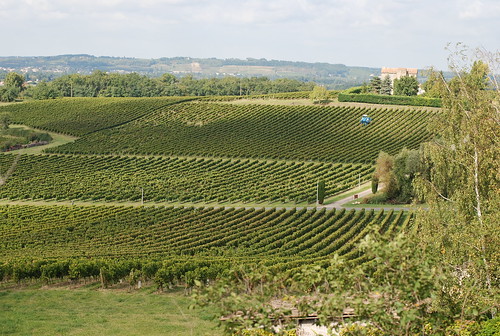
So, what are the classic regions? They center around France, of course. And also include Germany; Austria; Piedmont, Tuscany and the Veneto in Italy; Rioja, sherry and Albarino from Spain; and port and vino verde from Portugal. Also considered classic are New Zealand Sauvignon Blanc, Napa Valley Cabernet and Oregon Pinot Noir- the only New World wines that have been elevated to this status. I was off to a good start back in July, beginning this quest with Alsace, France. But, then I blew it. So, to make up for it I’m going after what is probably one of the most confusing, complicated, infuriating, expensive and famous wine regions in the world. Bordeaux. Pay close attention now, this is about to get tricky. And French.

Let’s start with the geography lesson. The name Bordeaux is derived from ‘au bord de l’eau’, which means ‘along the waters’. The region straddles three important rivers, mainly the Gironde and the two rivers that feed it, the Dordogne and the Garonne. French AOC (Appellation D’Origine Contrôlée) law dictates everything from vineyard borders, grape varieties allowed, alcohol levels, labeling and more. Bordeaux has 57 AOC regions, however only four of them stand out: Médoc, Pomerol, Graves/Pessac-Léognan and St-Émilion. But just to make it extra fun, the Médoc actually has multiple sub-appellations including Haut Médoc, St-Estèphe, Pauillac, Margaux and St-Julien. Also remember that Sauternes is in Bordeaux, although I already covered that in a previous post/tasting.

Next for the history lesson. Within many of the regions the various wineries, or château, are classified using various systems, the best well known of which is the 1855 Classification. France was sending wines to represent the country at the International Château Lascombes 00001aExposition that year so the top Médoc wines were ranked according to price (which equated to quality). Sixty-one Château were ranked from 1st growth through 5th growth: five 1st growths, 14 2nd’s, 14 3rd’s, 10 4th’s and 18 5th’s. There’s also a series of château classified as Cru Bourgeois in the Médoc. Last updated in 2003, there are 247 château on this list. Other classification systems exist for Graves (Grands Crus Classé) and St-Émilion (Premiers Grands Crus Classés and Grands Crus Classés). Still with me?

So, for the wine. Both red and white wine is made in Bordeaux, though close to 90% is red. Each year somewhere between 60 and 70 million cases of wine are made, among them some of the most expensive wine on the planet. Red Bordeaux wine (also known as claret) can legally contain only cabernet sauvignon, merlot, cabernet franc, petit verdot and malbec, the latter two are used only sparingly, if at all. White wine can contain sauvignon blanc, sémillon, muscadelle and ugni blanc, again with the last two rarely used. Since the grape varieties have been defined in the laws they are not on the label. Its illegal to put them on the label. So, it’s helpful to know that “left bank” wines (Médoc, Graves/Pessac-Léognan) tend to be primarily Cabernet Sauvignon and “right bank” wines (St-Émilion and Pomerol) tend to be primarily Merlot. Ready to go buy some Bordeaux based purely on the labels? Yeah, me neither.

Feeling an immense amount of pressure to choose the right wines, I conducted hours of research before heading to K&L. Its not like I can afford a first growth wine (futures of the 2009 Château Lafite-Rothschild, a first growth in Pauillac, are going for $1,599. A bottle.), but these wines are going to be my first ever Bordeauxs and I want to be sure I pick wines that are both representative of the specific regions, as aged as I can get them (no younger than 2005 for the reds), and less than $50 a bottle, preferably a lot less.

So I did what any reasonable person would do. I got out Kevin Zraly’s Complete Wine Course book, turned to the Bordeaux chapter and searched for every single Château he mentioned. I made a list of all the appellations I wanted represented (that would be nine) and all the possibilities K&L had. Based on Zraly’s vintage charts, wine descriptions and prices I finally narrowed it down to 10 wines (I have both a red and a white from Graves). Yep, this means we’ll be tasting, learning about and discussing Bordeaux in great detail until January!

BordeauxHere’s what I picked up:

2001 Château Camensac, Haut-Médoc $29.99
2008 Clos Floridene, Graves Blanc $24.99
2001 Domaine de Larrivet, Graves $16.99
2007 Château Cantelys Blanc, Pessac-Léognan $19.99
2005 Château De Pez, St-Estèphe $34.99
2005 Château Pedesclaux, Pauillac $39.99
1994 Château Langoa-Barton, St-Julien $49.99
2003 Château d'Angludet, Margaux $49.99
1995 Château Larmande, St-Émilion $44.99
2005 Château Lafleur-Gazin, Pomerol $39.99
Posted by Erin at 11/08/2010 09:42:00 PM in Bordeaux, cabernet franc, cabernet sauvignon, France, malbec, merlot, petit verdot

2004 Le Dauphin de Guiraud

I read somewhere recently, and I can’t remember where it was, that many serious wine-o’s don’t think Sauternes has reached maturity (and thus is ready to drink) until it ages to the amber color of honey. Well, I don’t have that kind of time (or money). This golden yellow wine is already 6 years old!

2004 Le Dauphin de GuiraudThe nose was very rich, you could tell it was a sweet wine. It smelled like honey, caramel, ripe peaches and what I would expect white raisins to smell like-- if they had a strong scent.

As with most higher alcohol, sweet wines, it was very full-bodied. I thought it had a bit of an oily viscosity to it. Honey was the strongest part of the nose, and it too was the strongest part of the taste. I also picked up apricots (which is pretty typical of Sauternes) as well as toffee.

When I was re-reading some of the Sauternes sections of my books, I think it was The Wine Bible where the author said, can you taste the botrytis? In other words, does wine made from moldy grapes taste like moldy wine? Well, the answer is no (and they don’t “wash off" the “fuzz” before making the wine), although she said experienced tasters can tell. It was hard not to think about it when I was drinking, trying to taste the botrytis. I can’t say for sure, but I did find a hint of raisin flavor. Kind of like the flavor you taste when you eat a fresh table grape that has just begun to go soft and raisinate. Was I tasting the botrytis or fooling myself?

Overall, the wine was good. But, I guess someday I’ll need to taste an aged, amber colored Sauternes to really experience Sauternes.

The Score: ★★★
Posted by Erin at 8/20/2010 08:54:00 PM in Bordeaux, France, Sauternes, semillon

Sauternes, France

Almost immediately upon beginning my wine education reading, I learned about noble rot. I started flipping through 1001 Wines You Must Taste Before You Die and found myself looking at a page about a wine from Spain, the Corona Reserva Blanco Semi Dulce. Noticing the vintage date on the wine was 1939, I read the description more closely. (Best read the description, I thought, since I’m clearly never going to have a bottle of wine from 1939 in my hand). In a bit of a history lesson, I learned that in 1939 the Spanish Civil War came to an end, though in Rioja things were so chaotic that the harvest was severely delayed. Thus the grapes used in this wine were “likely affected by botrytis”. Having no clue what that could possibly mean, I consulted my Oxford Companion to Wine.

Turns out there’s a fungus called botrytis cinerea (aka noble rot) that thrives on thin-skinned grapes with high sugar content in just the right moist and warm climates. The result? Moldy grapes. Exactly what everyone wants to make wine out of...? Apparently. This is the method used, on purpose, for some of the world’s most renowned sweet wines, including those of Sauternes, and has a long history dating back to the 1600’s in Hungary. (They use grapes that are nobly rotten for Tokay. Don’t worry, I’ll try that someday too.)

How this works is that the mold causes the escape of the water inside the grape (the mold needs the water to germinate its spores), leaving the sugar, acid and flavor more concentrated. Moldy, raisinated grapes result. In order to end up with these grapes the conditions have to be just right for the fungus to grow (location near water for moisture, cool nights and warm days), and grapes, or berries, are often picked one by rotten one from September and sometimes into November. What little juice remains in the grapes is then extracted and fermented into this apparently delicious, and sweet, wine.

Sauternes, which is wine made in the Bordeaux region of France (and can come from one of five communes, though Sauterenes and Barsac are the most well known), usually from Semillion, is probably the most famous wine made from botrytis afflicted grapes. So, a week or so after learning about this most noble of molds, when I found a small bottle for $19.99 at Whole Foods, I bought it. Never mind that I still had two months of pregnancy left at that time. I picked up the 2004 Le Dauphin de Guiraud, from Chateau Guiraud. This appears to be the second label wine from Chateau Guiraud (the first of which does appear in the 1001 Wines book), so it seems a good place to start. So, next up is this "nectar" of a wine.
Posted by Erin at 8/18/2010 09:07:00 PM in Bordeaux, France, Sauternes, semillon

About this blog

It’s my wine education. I’m drinking my way around the world. Join me, glass-in-hand, by starting here:

What I Knew When I Started

More

Follow Give Me Grapes on Twitter

How I Score

Archives

  • ▼  2012 (4)
    • ▼  September (2)
      • Critic’s Choice?
      • Summer of Wine
    • ►  May (2)
  • ►  2011 (23)
    • ►  December (1)
    • ►  November (1)
    • ►  September (2)
    • ►  August (1)
    • ►  June (2)
    • ►  May (1)
    • ►  April (3)
    • ►  March (4)
    • ►  February (4)
    • ►  January (4)
  • ►  2010 (36)
    • ►  December (2)
    • ►  November (5)
    • ►  October (5)
    • ►  September (8)
    • ►  August (8)
    • ►  July (6)
    • ►  June (2)
Home | About | Resources | Wine Century Club | Wineries
design by
kukubee